
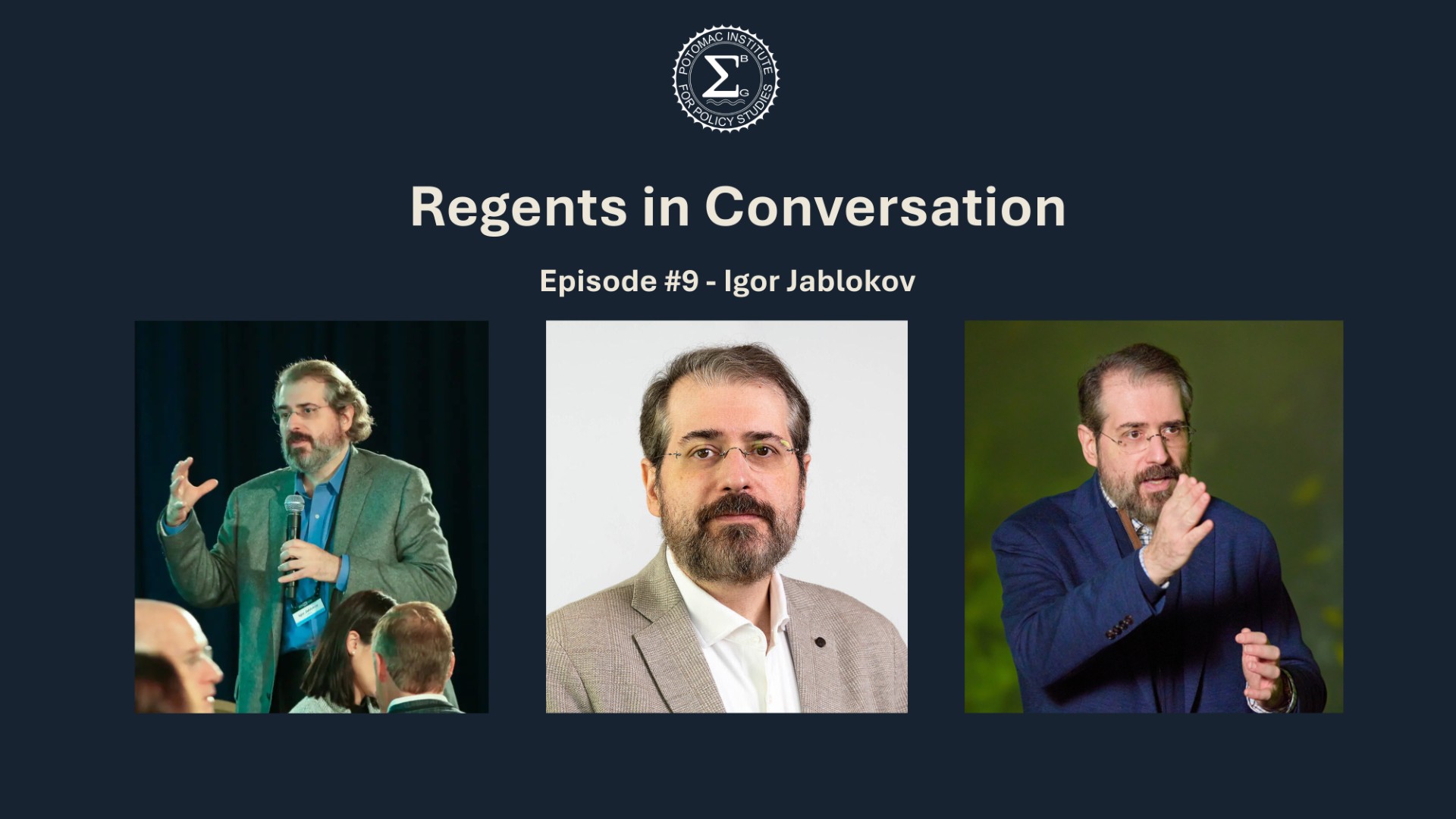
Igor Jablovsky on AI, Trust, and the Future of Security and Governance
As the Potomac Institute celebrates its 30th year, we are revitalizing our brand to meet the challenges of a contested global order. Central to this transformation is the "People Power" that has defined us for three decades, led by our Board of Regents. Welcome to our latest interview series: Regents in Conversation, a masterclass in the bold, unconventional thinking that gives our clients, and our nation, what it needs, not just what it wants.
In this series, CEO Jennifer Buss sits down with a few esteemed members of PIPS’ Board of Regents to discuss their respective work and careers, their experience with The Potomac Institute, and their thoughts on current and future policy topics.
In this episode of Regents in Conversation, Potomac Institute CEO Jen Buss speaks with Igor Jablokov, a member of the Potomac Institute’s Board of Regents. A technology entrepreneur and AI innovator, Jablokov is the Chairman, CEO, and Founder of Pryon and previously founded Yap, whose voice-recognition technology later became Amazon’s first AI-related acquisition and helped inform products such as Alexa, Echo, and Fire TV . He also served at IBM, where he led the team that designed the precursor to Watson. Drawing on that background, the conversation explores the opportunities and governance challenges created by artificial intelligence, including trust, resilience, and the national security implications of deploying AI in high-consequence environments.
Key Takeaways
- AI trust must be treated as a policy priority, not a secondary technical issue.
- Congress and DoD need AI regulation that is specific to mission, use case, and risk.
- AI risk mitigation must cover infrastructure as well as software, including data, power, and hardware dependencies.
- Human oversight and resilient backup systems remain essential in high-consequence AI environments.
- Domestic AI capacity and secure production should be viewed as national security priorities.
- AI will be most powerful when it works the way people already think and communicate.